
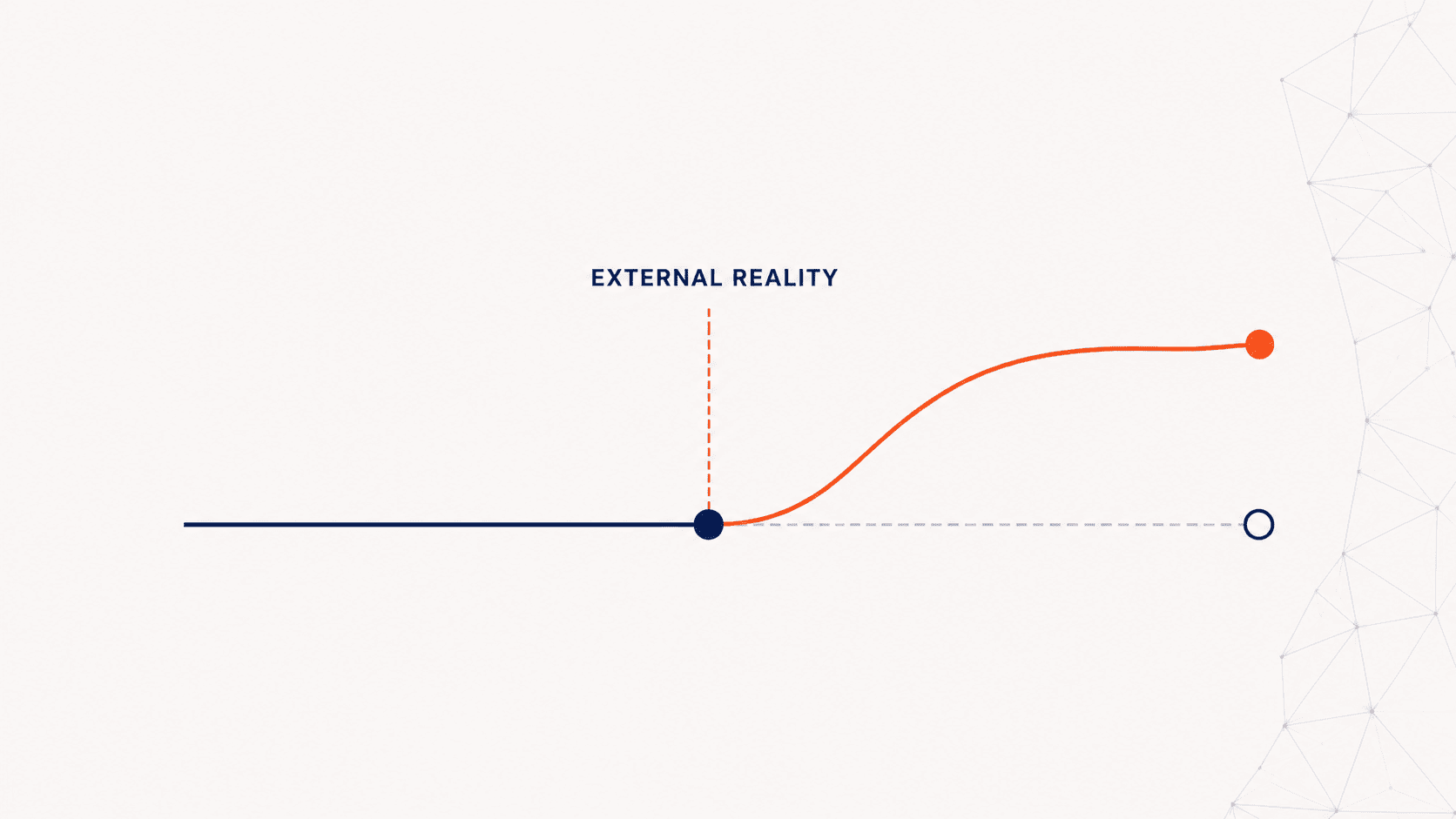
Strategic communications is often treated as something that begins once a decision has been made. The greater opportunity is to use insight from outside the organisation early enough to improve the judgement behind the decision itself.
Most organisations still organise communications as a series of events, moving from strategy to campaign to reporting cycle before starting again. The world they are communicating in does not behave that way. Stakeholders continue to form judgements, experience the consequences of decisions and respond to what they see. Reputation keeps forming whether the organisation is actively communicating or not.
What has changed is the speed at which that response now comes back. A decision can quickly provoke a response from employees or customers. That response may attract wider attention and begin to alter the environment in which the original decision is being implemented. The strategic advantage is therefore not simply being able to communicate faster. It is being able to learn faster from what comes back and use that learning before the next decision is made.
When communications comes in too late
In many organisations, the sequence is still relatively simple: make the decision, then communicate it. Communications sits downstream from strategy, expected to communicate and defend what has already been decided. The weakness in that model is not that communications lacks sufficient status. It is that useful external information may arrive too late to influence the judgement that matters.
One pattern we see repeatedly is communications teams being asked to solve problems whose causes sit much earlier in the decision-making process. A decision can make complete sense internally and still fail because the organisation has misunderstood the environment around it. Leadership may be relying on an assumption that no longer holds. More fundamentally, the organisation's behaviour may itself create the problem. What it does may not support what it later wants people to believe. At that point, better explanation has limited power.
Strategic communications can contribute earlier by bringing a fuller understanding of stakeholders and the external environment into the decision while there is still time to use it. That does not mean communications owns the decision. It means the people making it have access to information that might otherwise be absent.
Sometimes the evidence will confirm the organisation's existing view. At other times, it will expose where that view is incomplete. Where possible, strategic communications should help test assumptions before they harden into decisions that become difficult or costly to reverse.
Use communications intelligence to challenge assumptions
Collecting information is different from learning from it. Communications intelligence becomes strategically useful when it changes what the organisation understands about the situation or gives leadership reason to reconsider an assumption.
Organisations are naturally capable of producing evidence that supports what they already believe. Strategic communications should also bring back evidence that complicates that picture. An interpretation of a decision that appears unreasonable from inside the organisation may become entirely rational once the stakeholder's experience is understood.
This problem becomes more acute at senior levels. Information tends to become cleaner as it travels upwards. Complexity is reduced and context is interpreted before it reaches the decision-maker. The version that arrives can be more coherent than the reality it represents.
Strategic communications can help counter that by bringing a less filtered view of the outside environment back into the organisation. Its value lies in whether the organisation learns something that improves the judgement being made.
Judge communications by the decisions it improves
A strong communications function should therefore be judged partly by the important assumptions it helps an organisation correct. That goes beyond measuring what the function produces or the immediate response those communications receive.
Part of its value lies in surfacing information early enough to affect a decision before the organisation becomes committed to explaining or defending it. Sometimes the underlying decision is sound and clearer communication is enough. At other times, the evidence should lead leadership to reconsider what it was planning to do.
The best communications leaders have worked this way for years. The gap is often organisational. Many organisations still structure and measure communications around visible outputs rather than what the function helps leadership understand.
The same principle should shape measurement. Reporting still needs to establish whether communications performed as intended. Its greater strategic value lies in what the response reveals about the assumptions behind the decision. That response may show that circumstances have changed enough to require a different course. Measurement becomes strategically useful when that learning feeds the next judgement rather than merely closing the previous reporting cycle.
Reputation does not wait for the next communications cycle
Reputation is continually revised by people outside the organisation as they experience what it does and draw their own conclusions. Communication can influence that process, but it cannot override behaviour that points in another direction. If a decision or pattern of behaviour creates the reputational problem, downstream explanation can only do so much. And if reputation forms continuously, reputation strategy cannot sensibly operate periodically.
An organisation needs to understand how it is being experienced and bring what it learns back into subsequent decisions. The real value of strategic communications lies in bringing external reality into the room before the decision becomes fixed.
About Manara Global - Abu Dhabi and Dubai Strategic Communication Agency
Based in Abu Dhabi and Dubai in the UAE, Manara Global is a strategic communication agency partnering with businesses, governments, and organisations to enhance their reputation, define their purpose, and shape their communication strategy to connect with audiences in a human-centric way. Our purpose is to help leaders, businesses, and organisations to thrive, make a difference, and succeed. Contact us to learn more about how Manara Global can help you safeguard and elevate your business reputation.